Monday, December 5, 2011

REPORT FROM FLAG: MERRY CHRISTMAS 2011


REPORT FROM FLAG: Christmas 2011
Both Gretchen and I think that these years in Flagstaff have been the happiest years of our lives. We are doing what we want to do. Our health is good to excellent. We have enough money to live comfortably, and we are obligated to no one. In addition to our love for each other, a good part of our happiness is that we are busy doing what we enjoy.

Gretchen continues her jewelry making and ceramics work along with belonging to Soroptomist International of Flagstaff, a group of women who work for the welfare of women, and the AAUW. She is also a member of the Artists’ Coalition of Flagstaff. She is involved in many art shows and sells her jewelry through a store in Sedona called Stone Creations.
I edit a weekly column of gardening for the Arizona Daily Sun called Gardening Etcetera and tutor four students (Nepal, Vietnam, Poland, and Zimbabwe) at The Literacy Center. Along with another tutor I’m teaching the Nepalese woman to write. She didn’t know how to write in her own language, having never gone to school. Happily, I was dismissed as the editor of the Master Gardener Column for the Master Gardener Program in March because my supervisor alleged that she no longer had time to be involved in the column. The editor of the AZDS then allowed me to continue writing the column with a name change from Master Gardener Column to Gardening Etcetera. All of this meant that I was no longer obligated to anyone and that the scope of the column broadened which is why being sacked was a cause for happiness.
We had three delightful trips last year. The first was to the Gem and Mineral Show in Tucson in February. It got so cold that the fountains at the motel froze solid over night.

We don’t move from Flagstaff from March through to October because it is such a delightful place to live, and also it is the time to garden. In October we spent four days at Casa Escondida in Chimayó, New Mexico, in the foothills of the Sangre de Cristo Mountains midway between Santa Fe and Taos. The name means “hidden house.” It is a lovely place to stay while exploring a fascinating countryside, especially with the autumnal colors

In November we went to California (Redondo Beach) for Thanksgiving with my children and granddaughter. We had a splendid time, saw some old friends, had dinner at the legendary Musso and Franks on Hollywood Boulevard, drove to Glendale to look at the homes in which I was born and raised, and enjoyed a magnificent feast prepared by Elizabeth and her husband Michael. Tim has retired from the LA County Fire Department and is moving to Hawaii. Paul is getting ready to buy a house and planning for retirement. Elizabeth and Michael are prospering. His business is doing well, and he co-authored a book on electrical grounding which will be published by McGraw-Hill. Our granddaughter, Dana Marie, Esq., is working for a law firm in Los Angeles and is the delight of everyone’s eyes.

I am sad to report the death of my former wife, Grace Marie, in March after long series of afflictions which she bore well.

Roxie is crippled more and more with arthritis but otherwise happy and healthy and continues to bring us great joy.

Politically and socially, Gretchen remains an ardent feminist, often accusing me of being too tepid, and I seem to drift even more to the left every time I hear some Republican open his mouth.

One thing that pisses both of us off is the use of the stupid, vapid, know-nothing, believe nothing phrase “Happy Holidays.” It is Christmas, the birth of the Christ Child, whom we celebrate. It is as Saint Matthew wrote: our Emmanuel, God with us, who brings us joy.


Love, Dana and Gretchen.


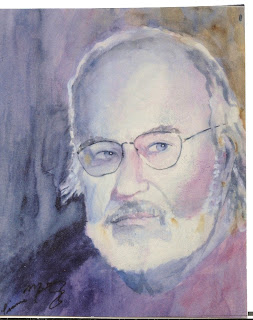
The first photograph is courtesy of Tom Bean, Flagstaff, AZ.

Saturday, December 18, 2010


REPORT FROM FLAG:

Merry Christmas


As most of us know but often forget, life is chancy. During the great Schultz Fire that wiped out a mountain side and set the conditions for a flood, the local newspaper, the Arizona Daily Sun, ran an article about an earthquake fault that run along Lake Mary Road, a few yards down the hill from our house. The floods came, devastating many of the homes to the northeast of Flagstaff. We even had tornadoes come near us in Bellemont, about ten miles to the west. However, the land is gorgeous all year long with the great Ponderosa pines and the foliage of the oaks, maples, and aspens in the fall. The air is clear, and for us life has been unbelievably good.

Both Gretchen and I are doing exactly what we want to do with no one bossing us around since we have no employers. We both think this is the happiest time in our lives. In addition to her rewarding participation in Soroptomists, Gretchen is putting her creativity and sense of style to work making jewelry and selling it, too, for handsome figures. I write and edit the Master Gardening Column for the Arizona Daily Sun and tutor at the Literacy Center. We both garden in the Spring, Summer, and Autumn.

I just had my annual checkup at the VA Clinic in Bellemont and passed with flying colors. Indeed, the staff likes to see me coming because I am so healthy. Not to brag, but my LDL, that’s the bad cholesterol is now 48, a very low number. Of course, pills helped. Gretchen, too, is in good health.

Roxie, too, is fit as a fiddle for a twelve year old dog. The vet who gave her to us in Temecula, Michelle Brennan, gave her some shots that really perked up the old girl, and she now accompanies me to the Literacy Center twice a week where she has pooped only once.

We have a delightful group of neighbors with all sorts and conditions of backgrounds. They often stop by in the afternoon for a glass of wine and conversation. The nice thing is that they don’t treat either of us as “senior citizens,” a phrase, I abhor, except that Stan clears our driveway with his snow blower.

Now, for the real bragging. My granddaughter and namesake and the love of Gretchen’s life, Dana Marie, graduated with honors from Loyola Law School in Los Angeles last May and passed the California Bar last November on the first try. She’s had great support from her grandmother, Grace Marie, and her mother, Elizabeth, and stepfather, Michael, and they must be proud out of their minds. It is very nice to have a grandchild who is smarter than I am. In addition to all of that, she immediately got a job. She’s a tall California blonde beauty with blue eyes who’s as sweet as candy and smart as a whip.

We’ve also become party animals, going to two Christmas parties in the same night.

Flagstaff is a unique town. It is hochkultur and down-home, country western. The nearest big city to the West is Los Angeles, to the East Albuquerque, and to the South Phoenix. To the north, once past the Grand Canyon, there is a vast void of awe-inspiring beauty. We are close by the Hopi Reservation and cheek by jowl with the Navajo Reservation. Northern Arizona University is in town which helps raise the cognitive level of the town along with the National Park Service, the Forest Service, the US Geological Survey, a Naval Observatory, and the Lowell Observatory. Of course, we have the IRS and FBI which, so far, haven’t bothered us.

When we went to California for Thanksgiving with all the family, we relished once again California’s beauty, especially the green and color. We had a great time, and I’m happy to report that no one is in rehab or jail. Tim is retiring from the LA County Fire Dept. Paul is still surfing. Elizabeth has become a first-rate cook and is still working to pay for Dana Marie’s education. Michael is a successful business man.

Of course, the real meaning of all this is the gift of the Christ Child which calls to mind that all of it is a gift for which we should all be grateful. The longer I live the more I realize that Jesus is our Emmanuel, God with us. Amen.


Gretchen and Dana

Saturday, August 14, 2010

REPORT FROM FLAG: XXXVII

The Rev. Dana Prom Smith, S.T.D., Ph.D. (10/13/10)

“He was a man for all the hours,” Erasmus on hearing of the death of his friend, Sir Thomas More(1535).

My older brother, Tom, died last week at 92 years of age. He suffered from Alzheimer’s disease for the last several years of his life in what has aptly been called “the long goodbye.” He died shortly after his wife, Meg, had fed him his last meal. Alzheimer’s had robbed the two of them of a long anticipated retirement and their dreams of travel.

He was a complete man. He knew his limitations and his capacities. He never tried to be anything other than who he was. He was not a dissembler. Although his business was called IMAGES, being a photographer, an artist, and a theatrical entrepreneur, he was authentic. In him there was “no variableness nor shadow of turning.”

I remember him best as an older brother during my childhood and adolescence, especially after our father, Dr. Tom, died when I was eleven. He was a beautiful physical specimen, happy, intelligent and charming. I thought of him as the ideal male. When I cut my foot on a rusty can at the beach, he carried me up a steep hill for several blocks on his back. I felt safe. In many respects, he filled the place of my father.

He was also a rebel. Our father, a residual Victorian, had plans for his sons, Tom for medicine, David for the university, and me, the youngest, for the church. David, the middle brother, and I became what he wished. Tom rebelled and chose the life of an artist which was ironic because our father was also a sometime artist and a good one, a photographer and a maker of fine jewelry, an avocation often followed by dentists. He was also a whiz at mathematics.

Of the three brothers he was the sweetest.

After I was discharged from the Army, I worked for a year on a road gang to get more money to go to college, but after that we drifted apart. I went east to college at Princeton, to theological seminary in Kentucky, and graduate school at the University of Chicago. He went on to develop a thriving career as an artist in California, becoming involved in the Hollywood community, and eventually marrying Cary Grant’s assistant. The consequences of that drift I deeply regret. I would have been enriched even more by his presence if we had been closer.

He had a rich and rewarding relationship with his wife, Meg, who remained faithful to him in his years of slippage. Such a fidelity requires courage.

A death in a family always begets regrets, but it also begets memories. At 83, I am the last of my family. The experience closest in feeling to the death of my older brother was the death of my mother, Hazel. I was with her when she died, holding her hand, talking of our life together. She would fade away, and I would raise my voice to call her back. Finally, she did not come back.

Several months later in the spring of the year, my first wife, Grace Marie, and I adopted twin boys, Tim and Paul. I sat down to write my mother a letter. A few lines into the letter I realized that she was dead in addition to realizing that there would never be anyone to whom I could report, as does a child to a mother. The full realization of the death of loved one some times takes years. An era of my life was over. So it is now. A generation has passed. There is no one left who can understand those references to the past. There is no shared laughter over the time the bed broke in two during a wrestling match or the time late at night when he pissed into a waste basket thinking it was the toilet.

When I tell anyone of my experience of listening to the radio announcing the Japanese attack on Pearl Harbor while playing Monopoly with my friend, Kirk Hallum, the eyes of the listener get that thousand yard stare. A teenager, I was terrified because I knew that I would eventually go to war, and the terror grew more acute as the battles raged and casualties mounted and my brother, David, was badly wounded on Iwo Jima.

We are left with memories which enrich our lives far more than any possessions we have accrued. The young live by anticipations which have no substance until they become accomplishments. The middle-aged have both anticipations and memories although the anticipations become more poignant as the likelihood of their realization diminishes.

Oddly, at 83 I still think of myself many times as middle-aged as I look forward to writing and editing the Master Gardener Column for the local newspaper, tutoring at the Literacy Center, and teaching Latin to school children, all in Country Western Flagstaff. The old are the richest of all with abundant memories and even some vicariously envied anticipations in children and grandchildren, Tim, Paul, Elizabeth, and Dana Marie. At her graduation from Loyola Law School, I found myself looking at the future through her eyes.

Ironic it is that with Gretchen we’ve adopted each other’s memories and can assimilate our histories. A good part of my wealth is in my memories of Tom who meant so much to me as a boy and an adolescent. He was a complete man. As Marc Antony said of Julius Caesar, “His life was gentle, and the elements/So mixed in him that Nature might stand up/And say to all the world, ‘This was a man.’” Amen.

Sunday, April 11, 2010

REPORT FROM FLAG: XXXVI

The Rev. Dana Prom Smith, S.T.D., Ph.D. (3/15/10)

Gays, lesbians, cross-dressers, and trans-genders are much in the news nowadays, especially with the issue of gay and lesbian marriages. Swirling around us, these concerns have caused most of us to think about the complexity of these issues. My evolution began with a traditional rearing by conservative parents for which I am enduringly grateful. Back in the 1930's, they were for civil rights and human dignity, especially as far as race was concerned. The issue of sexual identity never arose as far as I can remember except for occasional smirks and rolled eyes about old maids living together and references to "odd couples."

I vividly remember my father chastising me for treating the black elevator operator at his office building as an inferior. "Aye, laddie, they'll be as much the Lord's children as are you and I. Now, you'll be going back to express your regrets, like a man, and offer him your hand." The elevator operator smiled broadly, shook my hand, and said, "You're Dr. Smith's son, aren't you?"

I heard about "queers" and "fairies" in school and on the streets. It remained largely in the back of my mind except for one event when I was approached in a men's room when I was about 13 in 1939. Distressed and frightened, I talked to my mother about the event. My father was dead at the time. My mother told me not to worry, went to the store where the man worked, and excoriated him. He always lowered his head after that.

The whole issue remained dormant, except for those times during puberty when sexual identification is a paramount issue as a boy has fleeting fears that he may be a "queer." That disappeared when I discovered girls.

During my military service I was generally unaware of the issue. As I look back on those years, I think in our close knit unit there was a homosexual, but nothing ever surfaced. A good bit of the time, I was fearful, being in recurring perilous situations. When people are afraid for their lives, sexual identification is not an issue. Of the five men in the unit, all are dead save for me. I understand one died of AIDS. One was killed in Selma while we were there during the civil rights marches. The other two died of alcoholism and a heart attack.

Of course, throughout the years I was approached three or four times by homosexuals, events I found unpleasant largely because I did not how to reject the approaches gracefully. I hate being awkward.

When the issue of the ordination of homosexuals arose, I opposed it, largely on the grounds of tradition. I regret my opposition because I think that my reasons were flawed and my attitude harmful. In retrospect, I think my opposition came more from my basic conservatism than anything else.

During the years I taught clinical hypnoanalysis to psychotherapists, many gays and lesbians came to the classes, and I felt at ease with them. Also, during those years I had many gay and lesbian clients which compelled me to think of them as human beings, not as peculiarities. Of course, the two years I spent as an intern at UCLA's Neuro-psychiatric Institute led me to rethink a lot of my traditional attitudes. The big change was that I began to think of them as human beings, not as defective specimens.

Indeed, for many years my office mate was a politically ardent lesbian who asked me to officiate at her wedding to another lesbian. I liked and admired her, and after a few hours thought, I agreed to do it, much to the displeasure of many people. This was about 1975. I took the marriage ceremony of the Book of Common Order of the Church of Scotland and changed the pronouns. The locale of the ceremony was spectacular on a hilltop overlooking the sea at Laguna Beach.

I continued to have many gay and lesbian clients, and sometimes I felt a little nonplussed and awkward when specific details of sexual encounters were discussed. For the most part clients tend to withhold specific information that would be useful to know, but now and then clients gave me more information than I wanted to know. However, my psychotherapist's tendency to set aside personal feelings overcame my discomfiture.

The biggest challenge occurred when a man called me several times on the telephone, never giving me his name, asking me about my attitude toward gays and changing gender. I agreed to meet him, and that meeting led me to do a lot of soul-searching. The man I met was tormented and terrified. He felt he could not remain a male but was frightened of going through the operations needed to change his gender. I knew I had to respond. I remembered my father's admonition that mercy, not rectitude, was a cardinal virtue. "Aye, at the Grand Assize 'tis best the Lord judge us a fool than a man without mercy."

The question in my mind: was the whole issue an offence to my traditional proclivities or a simple matter of correcting a mistake, as in repairing a harelip or a clubfoot. I concluded that deformities of the spirit were just as likely to happen as deformities of the flesh. I remembered the many times I heard gays and lesbians tell me that they felt the way they did from early childhood. After working through the issue with him and preparing him for the change, he disappeared. So I do not know the outcome. He remains a lingering mystery, as much of my life.

During the civil rights crises of the 1960's and 70's I was heavily involved, marching, demonstrating, preaching, and meetings all of which were accompanied with cross-burnings on my front lawn, telephonic threats late at night, beatings at the hands of a racist mob, and brief periods in jail. One time I expressed to a college student my personal distaste for many things about modern black culture. She expressed surprise and asked me how I could be for civil rights for blacks and not like some of their culture. My reply was simple. A person has rights whether or not I like them or their culture. As a matter of fact, I don't like most of modern popular culture, being old-fashioned, but that has nothing to do with human rights.

Ultimately, it comes down to an issue about oddity. How much oddity can a society tolerate? One thing for sure is that a society cannot tolerate anti-social and sociopathic oddity, as in theft and murder. While many of us may find gay and lesbian marriages, cross-dressing, and sex change operations odd, they are clearly not anti-social. It's time for a lot of people to grow up and stop dealing with their own personal fears and distastes by condemning other people. For me, it has finally come down to the death and resurrection of Jesus Christ. He died and rose for everyone which means that every human being is worth the sacrifice of Christ. We all bear God's image and the mark of Christ. As Saint Paul said, "It is God who justifies, who is to condemn?"
Amen.

Wednesday, March 24, 2010

REPORT FROM FLAG: XXXVI

The Rev. Dana Prom Smith, S.T.D., Ph.D. (3/15/10)

Gays, lesbians, cross-dressers, and trans-genders are much in the news noadays, especially with the issue of gay and lesbian marriages. Swirling around us, these concerns have caused most of us to think about the complexity of these issues. My evolution began with a traditional rearing by conservative parents for which I am enduringly grateful. Although back in the 1930's, they were for civil rights and human dignity, especially as far as race was concerned, the issue of sexual identity never arose as far as I can remember except for occasional smirks and rolled eyes about old maids living together and references to "odd couples."

I vividly remember my father chastising me for treating the black elevator at his office building as an inferior. "Aye, laddie, they'll be as much the Lord's children as are you and I. Now, I'll be wanting you to go back and express your regrets, like a man, and offer him your hand." The elevator operator smiled broadly, shook my hand, and said, "You're Dr. Smith's son, aren't you?"

I heard about "queers" and "fairies" in school and on the streets. It remained largely in the back of my mind except for one event when I was approached in a men's room when I was about 13 in 1939. Distressed and frightened, I talked to my mother about the event. My father was dead at the time. My mother told me not to worry, went to the store where the man worked, and excoriated him. He always lowered his head after that.

The whole issue remained dormant, except for those times during puberty when sexual identification is a paramount issue as a boy has fleeting fears that he may be a "queer." That disappeared when I discovered girls.

During my military service I was generally unaware of the issue. As I look back on those years, I think in our close knit unit there was a homosexual, but nothing ever surfaced. A good bit of the time, I was fearful, being in recurring perilous situations. When people are afraid for their lives, sexual identification is not an issue. Of the five men in the unit, all are dead save for me. I understand one died of AIDS. One was killed in Selma while we were there during the civil rights marches. The other two died of alcoholism and a heart attack.

Of course, throughout the years I was approached three or four times by homosexuals, events I found unpleasant largely because I did not how to reject the approaches gracefully. I hate being awkward.

During the years I taught clinical hypnoanalysis to psychotherapists, many gays and lesbians came to the classes, and I felt at ease with them. Also, during those years I had many gay and lesbian clients which compelled me to think of them as human beings, not as peculiarities. Of course, the two years I spent as an intern at UCLA's Neuro-psychiatric Institute led me to rethink a lot of my conventional attitudes. The big change was that I began to think of them as human beings, not as defective specimens.

Indeed, for many years my office mate was a politically ardent lesbian who asked me to officiate at her wedding to another lesbian. I liked and admired her, and after a few hours thought, I agreed to do it, much to the displeasure of many people. This was about 1975. I took the marriage ceremony of the Book of Common Order of the Church of Scotland and changed the pronouns.

I continued to have many gay and lesbian clients, and sometimes I felt a little nonplussed and awkward when specific details of sexual encounters were discussed. For the most part clients tend to withhold specific information that would be useful to know, but now and then clients gave me more information than I wanted to know. However, the psychotherapist's tendency to set aside personal judgments helped.

The biggest challenge occurred when a man called me several times on the telephone, never giving me his name, asking me about my attitude toward gays and changing gender. I agreed to meet him, and that meeting led me to do a lot of soul-searching. The man I met was tormented and terrified. He felt he could not remain a male but was frightened of going through the operations needed to change his gender. I knew I had to respond. I remembered my father's admonition that mercy, not rectitude, was a cardinal virtue.

The question in my mind: was the whole issue an offence to my religious convictions or a simple matter of correcting a mistake, as in repairing a harelip or a clubfoot. I concluded that deformities of the spirit were just as likely to happen as deformities of the flesh. I remembered the many times I heard gays and lesbians tell me that they felt the way they did from early childhood. After working through the issue with him and preparing him for the change, he disappeared. So I do not know the outcome.

During the civil rights crises of the 1960's and 70's I was heavily involved, marching, demonstrating, preaching, and meetings all of which were accompanied with cross-burnings on my front lawn, telephonic threats late at night, and brief periods in jail. One time I expressed to a college student my personal distaste for some things about modern black culture. She expressed surprise and asked me how I could be for civil rights for blacks and not like some of their music. My reply was simple. A person has rights whether or not I like them or their culture. As a matter of fact, I don't like most of modern popular culture, but that has nothing to do with human rights.

Ultimately, it comes down to an issue about oddity. How much oddity can a society tolerate? One thing for sure is that a society cannot tolerate anti-social and sociopathic oddity, as in theft and murder. While many of us may find gay and lesbian marriages, cross-dressing, and sex change operations odd, they are clearly not anti-social. It's time for a lot of people to grow up and stop dealing with their own personal fears and distastes by condemning other people. For me, it has finally come down to the death and resurrection of Jesus Christ. He died and rose for everyone which means that every human being is worth the sacrifice of Christ. We all bear God's image and the mark of Christ. As Saint Paul said, "It is God who justifies, who is to condemn?"

Saturday, December 19, 2009


CHRISTMAS CHEER FROM THE HIGH COUNTRY

The white of a white Christmas arrived in Flagstaff a couple of weeks ahead of time by means of a blizzard with several feet of snow and white-outs. We had a great time sitting beside the fireplace with Roxie as the winds howled outside. Now, we hear that the Republican state senators in Phoenix are going to cut even more funds from snow removal budgets, but, Republican mischief aside, the countryside is beautiful, a picture postcard fairyland.

Happily, we have several neighbors with snow blowers who remove the snow from our driveway, wanting to prevent Dana from having a heart attack although he had a glowing report after his annual checkup at the VA Clinic in Bellemont and also from his cardiologist. The physician said, "It is so nice to see someone in such good health." We supply our neighbors with home-grown tomatoes during the summer, taking them to an occasional fancy brunch as well, and they remove snow in the winter.

Gretchen has had several successful shows for her Raku jewelry and is selling it at boutiques in Flagstaff and Sedona. It is as though she has re-invented herself as an artist after years as a flight attendant for TWA and a saleswoman. Her success has not only been artistic but financial, too. She is expanding her interests to work in bronze and copper precious metal clay.

Dana continues to work as the editor and writer for the Master Garden Column in the Arizona Daily Sun and is working on three writing projects, clinical hypnosis in the exploration of dreams, a practical theological guide, and poetry. Gretchen is very active in Soroptomists, thoroughly enjoying herself in community projects.

We had a great Thanksgiving with the family in Redondo Beach. Everyone is well. Elizabeth is a fine cook. Michael, her husband, is a gracious host. Dana Marie is in her final year of law school and will be an "extern" for California's Court of Appeal. Tim is preparing to retire from LA County's Fire Department, and Paul is still body surfing. Everyone is gainfully employed and prospering, and no one is in rehab or jail.

In our apocalyptic times the abiding sense of God's grace in the infant Jesus gives us a sense of stability and triumph. We hope you all have a Merry Christmas and a Happy New Year. As we get older, we enjoy life more and more. We hope you all Hang in There!

P.S. Roxie is a joy and is well, her pink nose glows in the cold.

Gretchen and Dana, Christmas 2009.

Thursday, January 1, 2009


REPORT FROM FLAG: XXX

The Rev. Dana Prom Smith, S.T.D., Ph.D. (8/8/07)


Flagstaff is a confluence of several distinct communities. First of all, there are the Indians, the Navajo and the Hopi. Their reservations are nearby. Their presence is felt. Obviously, they have little affection for the white man. They contribute to the local economy and are widely celebrated. However, they are treated almost as though they were third-world. They suffer from rampant poverty, poor education, and endemic health problems, particularly diabetes and alcoholism. They are very patriotic and have that peculiarly defiant pride of race found in the oppressed. They do not treat their dogs well, and although they claim to have reverence for the land, they do not treat the land well, either. Like everyone else, they are not always consistent.

Then, there are the old-timers who are about my age, the descendants of the early white settlers, a settlement which dates from just after the Civil War. The early settlement was largely shepherds, cattlemen, farmers, lumbermen, railroad men, and prospectors. The area around Flagstaff was called “terra incognita” and a place of brigands and prospectors by the second Territorial governor in 1865. The first territorial capitol was in Prescott and was a log house which is now a part of the Sharlott Hall Museum in Prescott, a worthwhile visit. Flagstaff was settled about the same time my grandfather, Brynjolf Prom, a retired Norwegian ship’s captain, was surveying North Dakota and Montana for the Great Northern Railway. He left the sea after his brother had been washed overboard during a hurricane in the Caribbean.

A third group is composed of governmental employees, the U.S. Forest Service, the U.S. Park Service, the U.S. Coast and Geodetic Survey, the Naval Observatory, Arizona Game and Fish, and various state and local agencies in addition to the Lowell Observatory. They are bureaucrats and have a bureaucratic turn of mind which is rule bound. As human beings we either tend to seek security or freedom. We can’t have both. People who serve in governmental jobs are generally amongst the security seekers. The emotional consequence is often depression because bureaucracies are hierarchical which means subordination. The result is a bitterness resulting from a suppressed anger at the humiliation of subordination. On the other hand, the emotional price of freedom is anxiety.

A fourth group is the faculty of and people who work for Northern Arizona University. There is some cross-fertilization between the government people and university people. The university people are typical of university people and ecclesiastics everywhere, slightly condescending as though they know better which, of course, they don’t. They are invested in ideas and concepts. They also have chosen security which adds a touch of bitterness to their condescension. As anyone with a doctorate knows, getting one is often quite humiliating, modern universities no longer being communities of scholars, but rather educational bureaucracies.

Gretchen is part of a flourishing community of artists of potters, musicians, writers, sculptors, and painters. Some are obviously cross-fertilized with the art department university types, but for the most part they seem to be self-starters. As with many artists they see things in life differently than the mainstream, whatever that is.

As far as I can see, there are a lot of people in Flagstaff who do not contribute to the gross national product. They analyze, comment, try to understand, theorize, and criticize, but their products are all on paper, in hard drives, on discs, and in journals.

There are still a few farmers, lumbermen, cattlemen, railroad people, and shepherds, but the biggest producers nowadays are high tech manufacturers. Industry is somewhat inhibited because of a water shortage in Flagstaff. They, of course, cross fertilize with the university. W.L. Gore, for instance, is a large developer and manufacturer of medical devices.


Flagstaff is the medical and commercial center of rural northern Arizona with a large hospital and a prosperous business community. The city seems to thrive with both local consumers and tourists. There is quite a successful community of shops in downtown Flagstaff.

A fairly large Hispanic community seems to flourish in Flagstaff. Originally, a lot of the workers in the lumber mills were Hispanic or African-American. As a matter of fact, I helped plant some roses at the local African Methodist Episcopal Church.

Many of the original white settlers were from the Southern States just as many of the first settlers in Minnesota were New Englanders, both groups following the geographical parallels. One of the interesting things about the early settlers is that they report a much higher precipitation in the past than exists today with 10 to 20 foot snows. Apparently, global warming has been going on a long time before its recent discovery.

In the unincorporated land around Flagstaff, to the northeast, west, and south, there are scattered settlements of people who like the rural life, especially its isolation and horses. Often, they do not have water and have to “haul it” in large plastic tanks. One of them told me that the water costs a penny a gallon and, if hauled by someone else, four cents a gallon. In the local newspaper (Arizona Daily Sun) the other day, there was a delightful piece about a Mule Whisperer, a man and his wife who raise and train mules.

Finally, Flagstaff has a flourishing underclass. Just as addicts and drifters are drawn to Santa Monica, so they are to Flagstaff. They live in the woods in the spring, summer, and fall and in shelters in the winter. Although Flagstaff is generally a liberal community, one of the marginal steak houses and taverns in town sports anti-gay and anti-lesbian signs. Recently, there were reports of Molotov cocktails being thrown at the establishment, but the suspicion is that they were being thrown from the establishment out on the street. The bartender was arrested on suspicion of being drunk and on drugs. Flagstaff has never quite shaken its Wild West past with the result that we have a collection of marginal cowboy wannabes with broken down pick up trucks parked at bars rather than real cowboys with horses tied up at water holes. Same old rot gut served.

With the governmental employees, NAU faculty, artists, and high tech employees, there are a lot of interesting people doing interesting things. In addition to that, the weather is varied and enjoyable, the air clear, and the scenery magnificent.

Have a Happy Summer,
Dana

Monday, December 22, 2008


MERRY CHRISTMAS 2008

Gretchen and Dana Smith

If anyone has ever wished for a white Christmas, they should come to Flagstaff. We're on the tail end of a massive snow storm, lasting four days, dumping more than three feet of snow on our back deck. Schools have been closed for three days. The ponderosa pines behind and beyond our deck don't need to be flocked, heavily laden, as they are, with snow. The beauty of our landscape is picture postcard.

We're content and happy, probably the most content and happiest in our lives, at least for two opinionated people. We're in good health and doing exactly what we want to do. Gretchen has become an artist, creating and fashioning jewelry, especially necklaces, from her raku fired beads and other stones and metal beads. People admire and buy her work. She's been in several juried shows.

Dana works in the garden and writes a column on gardening for the local newspaper, the Arizona Daily Sun, along with editing other contributors to the Master Gardener Column and firing off letters to the editor. Roxie, on a stringent diet to loose 30 of her 90 pounds, causes Gretchen and Dana much angst as she plaintively begs for more food.


Also, we have many very nice neighbors, especially at snow removal time, plowing us out with their snow blowers. One of the many advantages of age is that people do things for one.

We had a delightful Thanksgiving visiting family in California where Elizabeth cooked up a splendid meal. Dana Marie is in law school, second year, and doing well. Michael, Elizabeth's husband, oversees a successful world-wide business. Tim is getting ready to retire from the LA County Fire Department, purchasing property in Thailand, and Paul cruising along making a name for himself on eBay.

We're grateful that our national nightmare is over with the election of Barack Obama. As Mrs. Obama said, "We can be proud to be Americans again."

We hope to see our government and leaders invest in human beings once again rather than inhuman right-wing Fundamentalist self-serving ideologies. God invested in human beings by taking our flesh in the Christ Child. In addition to making us in his image, he also took our flesh and marked us with his blood. So let's a Merry Christmas, recalling the significance of the season for human dignity.

Gretchen and Dana

Tuesday, April 15, 2008

POT CALLING THE KETTLE BLACK

The Rev. Dana Prom Smith, S.T.D., Ph.D. (4/14/08)

Hillary Clinton calling Barack Obama an elitist is akin to the pot calling the kettle black. Without noble lineage, Hillary Clinton climbed the social and political ladder along with Bill to become la nouvelle élite, having already become nouveau riche. Now, as a country we’ve celebrated our belief in equality by electing a president of noble lineage who ran as a regular guy and proved himself under-equal.

Hillary accuses Barack Obama of elitism when he points out what she knows to be true. Poor people, people who’ve lost their jobs, and people who have a hard time scraping by are resentful and bitter. Perhaps, Hillary for all of her pitié élitiste hasn’t been in the trenches with the poor to know that they’re bitter.

Also, with her pious language, she avoids the truth that the poor and afflicted often turn to religion for solace. Sadly, she attacks Obama for pointing out a truth, that the poor are often bitter and sometimes seek solace in faith.

Then there is John McCain, the scion of admirals and a graduate of the Naval Academy, who blames the poor for being poor, having been publicly financed his whole life. Blithely unaware of the poor and the dispossessed, as an elitist, he calls Obama an elitist.

As members of the political elite who’ve brought us to this sad pass of war and recession, they should read Isaiah 3:15, “What do you mean by crushing my people, by grinding the face of the poor?”

Sunday, December 16, 2007


REPORT FROM FLAG: XXIX

Dana Prom Smith (9/17/05)

Gretchen and I went to the Coconino County Fair over Labor Day Weekend at Fort Tuthill County Park. Rain fell off-and-on during the day. I took shelter under the overhang at the Swine Barn while Gretchen visited the alpaca booth. As I waited for her to talk with the alpaca lady about a poncho, I munched on an ear of roasted corn and watched a small boy stamp in a puddle of water, pleased as punch with himself on his ability to make a big splash, a not-uncommon human failing. Clad in pressed chinos, an ironed shirt, and clean white shoes, he stamped his small feet in the muddy puddle. He looked around at the adults watching, smiling as he looked, knowing he was committing a forbidden act in public and getting away with it. So much for small boys.

A cheery, older woman, much younger than I, clad in dowdy clothing approptiate for a county fair, sat next to me. She repeatedly told the boy to be careful not to splash muddy water on passers-by. She informed me that she was his grandmother and that she didn’t have to worry about him getting his clothes wet and dirty. She reassured me, as though what I thought mattered, that she just wanted him to have a good time at the county fair. “You know,” she said, “you’re only young once.” I nodded an assent, not wanting to be impolite, but also not wanting to engage in a converation with her, focused, as I was, on my prized ear of roasted corn.

A tall, rangy, red-headed, freckled man with tattoos on his arms and numbers tattooed of his neck, clothed in a white undershirt and blue denims with a mass of keys hanging from his belt, also watched the boy. Smoking a cigarette, he held it as do a lot of marginal sorts, “lower orders of society” to use my father’s vertical metaphor, with the cigarette grasped between the index finger and thumb, cradled in the cup of his hand with the lip end pointed outwards and lighted end pointed toward his palm. He tried to hide his cigarette while smoking in plain view. His drags were not leisurely and gentlemanly slow but sharp, aggressive, and decisive with a sucking sound as though he were injecting himself with a narcotic which, of course, he was.

The woman with him was missing several molars and sported an abdominal tattoo with a ring in her navel to which, I suppose, a tether could be attached. She did not have a ring in her nose or her lip. She looked used as though she had been led around the block more times than one could care to count. As with many women in her position in life, she did not appear happy, her face remaining expressionless as though any show of emotion would be a show of weakness. A slight curl to her left nostril gave the impression of impatient disdain which is an emotion usually reserved for those who feel uncomfortably threatened in unfamiliar social circumstances. I thought it sad that her behavioral repertoire with which to cope with life’s vagaries was so slim and that she was so unsure of herself that the corny and trivial threatened her. I am sure, also, that she wanted her companion to know of her displeasure. I suspect that she thought she was on a cheap date or that she was co-habiting with a cheap man or, worse yet, that she was cheap herself. Neither of them would be fare prospects for a date at the fair.

The man said, “Ya know, man, havin’ fun sure don’t cost much when you’re a kid.” Everyone nodded, whereupon the boy’s mother, a purposeful appearing woman, strode upon the scene. Vexed, she grabbed the boy by the arm and shot a sharp glance at the grandmother as Broadway Joe Namath would rifle a football downfield. She hauled the boy off, saying, “How many times do I have to tell you not to play in the water?”

The boy’s father, an oafish sort, had been silently watching the free fun. The family marched off in file, obediently but not smartly, with the mother in the lead. The father stepped in line behind her, as would an adjutant. I heard the mother say to her husband, “You mean you just stood there and didn’t do a thing to stop it.”

The grandmother and grandfather brought up the rear as they trailed off. The grandfather had a hapless air as though he had brought up the rear most of his life. As John Kennedy often said, “There’s always some poor guy at the end of the line who never gets the message.” The sled dog with the only good view is the lead dog.

So much for free fun. The little boy didn’t pay an entrance fee, but he was sure going to pay a hefty exit fee. The ear of roasted corn set me back three bucks. It was a delight, sweet and crisp with a hint of smoke. Gretchen made an appointment to see the alpaca lady after the fair.

The swine were lovely. Some were black. Most were pink. All of them were sound asleep. A young girl sat with her pink pig, gently patting it and grooming it for the judging the next day. She looked forlorn, knowing that her friend the pig, would soon be sold to the highest bidder and suffer a bleak fate.

The bulls in the Cattle Barn were massive, black with red eyes. No one was sitting with them to groom them.

The sheep, goats, and alpaca have wide-set eyes which I learned increased their peripheral vision, the better with which to see impending threats, the periphery being the origin of most threats. The military calls them “flank attacks.” However, some threats either straight on or peripheral, as with our President, are never seen at all.

The scene at the fair set me to thinking about my relationship to Gretchen. She’s fond of describing our relationship in terms of a sailing ship. I’m the ballast. She’s the sails. The question is the identification of the helmsperson. It ain’t a helmsman.

All of which brings me to the point. I wish I had the brain that I have now sixty years ago when I was eighteen. I would’ve saved myself a lot of grief by cutting out the crap as with Ernest Hemingway’s “built-in, indestructable crap detector.” I have always had a spiritual bent, I suspect a gift from my grandfather, Brynjolf, an old Viking who was something of a mystic. Seafaring men are often either rotters or mystics. As an adolescent I talked with him for hours during the summers at our avocado grove in Vista. Also, coming of age during World War II induced me to ask the ultimate questions of life and death because I knew that eventually I would become a soldier and thus thought a lot about courage under fire, death, and life after death.

Also, my father had died when I was thirteen, and that changed my world. We moved from a large house to a smaller one in a less affluent neighborhood. Our memberships in the country club and the athletic club were cancelled. I felt secure but uneasy, having become an outsider where once I had been an insider. Then my grandfather died when I was fifteen.

I had been raised in the Christian faith, and it was in these circumstances that I began to explore it the more. In these explorations I suffered through the nonsense of Fundamentalism for about six years, unaware that I believed, not because of the Bible’s inerrancy, but because it made sense to me and gave me hope. Although I had became gradually alienated from Fundamentalism, I did not know why and felt confused. I suspect now in retrospect that I thought them gauche. I still do. I don’t like their style. It’s corny. I felt shallow about this until I discovered Alfred North Whitehead, the great British-American mathematician and philosopher, whose point was that reality is in the process, not the content. The way a person believes is as important as what one believes.

It was in these explorations that I experienced grace, the grace of God shown in Jesus Christ. I remember the place, time, and moment I felt grace. It changed everything. Since then, I was sixteen, many people have ridiculed me because of this experience, but, of course, they do not know of what they speak.

Fundamentalism is intellectually dishonest. As a boy I attended an afternoon class at church about the evils of drinking. A rather large woman dropped a couple of eggs into a glass of beer. They turned white. She said, “You see children what will happen to your insides if you drink alcohol.” I ran home awaiting my father’s return from his practice that afternoon. When he drove into the driveway, I ran up to him fearing that his insides had turned white. He smiled and said, “Dana, lad, there’ll be only one difficulty with that poor woman. Our intestines’ll not be made of egg white.”

Fundamentalists equate faith with correct doctrine as though they are the custodians of correct doctrine, just as do many Roman Catholics, Mormons, Greek Orthodox, and other authoritarian groups. In my Greek classes in college, I discovered that the word for faith is rooted in a verb. The experience of spirituality is not a noun. It is action, not in doing good deeds, but in giving oneself. The great German theologian, Dietrich Bonhoeffer, killed by the Nazis in a concentration camp, said it best when he said that seeing faith as correct doctrine and morals is “cheap grace.” I have concluded that many Fundamentalists are really mental and moral tyrants masquerading as Christians.

The first big cognitive breakthrough came in college when I discovered William of Occam in a freshman course in philosophy. A 14th century English philospher, he was the author of Occam’s Razor which goes “entities are not to be miultiplied beyond necessity.” In other words, keep it simple. It meant I could jettison a lot of Fundamentalism crap and still believe in Jesus. Then I encountered many high-powered professors who were also believers and weren’t Fundamentalists. My mother’s warning words came to mind, “Don’t believe everything you hear at church.”

Parenthetically, I am always puzzled by a lot of people who say, “As a Roman Catholic, I believe” so and so, “As a Mormon, I believe” so and so, or any other authoritarian group. Even agnostics and atheists begin the same way albeit somewhat churlishly, “Well, as an agnostic, I don’t believe” so and so, as though I should stand up and salute their superior doubts and disbeliefs. Do they not have minds of their own? Do they believe because someone else tells them what to believe? Such non-thinking is absurd. Any argument from authority is a fallacy. I have long since stop trying to have conversations with people who non-think. More and more I value John Locke’s tabula rasa, begin thinking with a clear slate.

I recall in a class in Greek one of the students impertinently asked the professor if he had found Jesus. The professor was the son of missionaries to India where they founded a college, had been in the OSS, the percusor to the CIA, as an secret agent in Greece during World War II. He became president of the university (Princeton), and finally the United State ambassador to India. In short, he was and is a considerable human being. Dr. Goheen, a dapper dresser, looked quizically at the student for a moment and then replied, “My young man, I didn’t know he was lost.”

Then I discovered Saint Augustine in a course on Medieval Theology. He cut through the crap of his day and asserted that people are not inherently evil because God created them good. History is not a story of the conflict of good and evil, but the sorry history of human beings who turn God’s goodness into evil purposes. In working with human beings one has to look for the good behind evil. This in no way discounts the magnitude of human evil. As a matter of fact, it makes evil all the more horrible because of what could’ve been. However, it allows for redemption rather than condemnation.

A course in Plato gave me the realization of the difference between appearance and reality. While I didn’t have to adopt Plato’s theories, I did have the pleasure of adopting his notion that what you see isn’t necessarily what you get. It’s called skepticism which is miles away from cynicism, the notion that everything’s rotten.

Recently, one of my club mates from Princeton told me of a book by an emeritus philosophy professor at Princeton, who was long after my time, by the name of Harry Frankfurt. It is short, 96 pages, and entitled On Bullshit. He makes the point that there is not only truth and falsehood, but also bullshit and that most of what we hear and read is bullshit. Politicians, advertisers, true believers of any kind, and authoritarian churches, and so forth and so on speak only bull shit. What a liberation!

Prof. Frankfurt makes the simple point, which I half-way knew all along, that people and institutions not only lie, they also bull shit. Dealing with liars takes more energy than dealing with bull shitters. The latter can be dismissed without effort. The liar at least knows the truth. The bull shitters have no conceptions of either truth or falsehood. They live in a dim world of intellectual muck, a world so dim that they embrace their muck, wallowing in it as an act of faith.

As muck goes, so goes my garden. My composters are flourishing, producing a bounty of vegetables and flowers. Our dinner salads, picked right before dinner, would cost, as Gretchen says, fifteen bucks in West Los Angeles or Newport Beach. The fresh green beans slightly cooked in a little butter, salt, and pepper make a meal.

Well, enough of all this.

Dana

Copyright © Dana Prom Smith 2005


REPORT FROM FLAG: CHRISTMAS 2007

Dana and Gretchen Smith


After years of getting Christmas letters written in several different
familial voices boasting of accomplishments, great and small, Gretchen encouraged me to add to the pile. So, here we go.

We have snow, lots of snow, for Christmas. About two feet fell over the last few days. Not only that, the skies are crystalline blue, and the San Francisco Peaks are covered with snow. Perhaps, maybe, our drought is beginning to break.

Aside from falling down on the ice just outside the Campus Coffee Bean on my way to pick up coffee grounds for my garden, I’m doing well. I’d given up trying to walk on water several years ago, and now I’m giving up on ice, too. Apparently, ordination doesn’t count for either water or ice walking. I wasn’t hurt except for some sore muscles, joints, and ego.

Speaking of boasting, my LDL is down to 74. After my annual physical examination, the physician said, “It’s always a pleasure to see you, you’re so healthy. Drink more water.” She says that everyone because it’s so dry here. I already drink lots of water. As a matter of fact, nearly everyone up here “hydrates,” which is hydrologically correct speech for drinking water. If anything, Flagstaff is politically correct what with all the persnickety academics floating around.

Gretchen is as robust as ever except for the damaged rotator cuff on her left shoulder which comes from her lifetime as a flight attendant pushing carts on TWA airplanes, now typing on her computer, and working with clay as a potter. Other than that, she greets every day with “I’m awake.”

Her work with Raku jewelry is reaping dividends, like money. She had a show, called “Artsy Divas,” which was very successful, and she sells her work through Sundara, a local boutique. She’s won several prizes, such as a blue ribbon at the county fair. She’s been featured in the CCC publication On Course. She’s a member of the Artists’ Coalition of Flagstaff and has sold and shown her work at several venues. She’s still active in Soroptomists International of Flagstaff.

I continue to garden and write. I am currently the coordinating editor of the Master Gardener Column in the Arizona Daily Sun, our local newspaper. I won three blue ribbons at the county fair for my beans, artichoke, and beets. An artichoke on the Colorado Plateau is an achievement which defies the laws of nature. I haven’t tried any figs as yet, but our pine trees are doing well with additional watering. Our native grasses flourish, such as sheep fescue which actually makes a lovely mounding lawn and creeping red fescue which if left unmown forms swirls. They require an annual mowing with a weed whacker to cut of the seed stems, and both are water wise.

April 7 was my 80th birthday, and we had a grand celebration in California at Walt's Wharf in Seal Beach with my children, Tim, Paul, and Elizabeth and Elizabeth’s husband, Michael, and my granddaughter Dana Marie who is a law student at Loyola Law School. They are all doing well. A friend of ours, Clayton, and my former wife, Grace, were also guests. We spent several days in California visiting friends and family, and I enjoyed smelling the ocean air once again.

Roxie continues to bring us joy. With her lovely green eyes encased in naturally black eyeliner, luminous pink nose, and soft, wavy butterscotch hair she continues in good health. Along with lots of other people she grays a little more each year, but her merry disposition remains the same. She brings the continuous gifts of joy, faith, and love.

Last October we vacationed in northern New Mexico, staying at a charming B & B near Chimayo. Casa Escondido is well-named. After leaving Interstate 25 north of Albuquerque, we took a state route around Santa Fe, aptly named a relief route, then another state road, two county roads, a dirt road, and finally a narrow one lane dirt track to the B & B. It was a great retreat. From there we drove the high road through small Spanish villages to Taos. The villages are largely peopled by descendants of the Conquistadores with some families aware of an eight generation history. The road traversed the sere foothills of the Sangre de Cristo Mountains and in one section outside of Truchas (8,500 ft) through the pines. The contrast of the bare, juniper dotted foothills and the verdant, color bursting valleys, formed by creeks roaring out of the mountains, makes a New Mexico autumn rival a New England autumn.

We were both saying to each other that this is the best time of our years. We wish to share the joy of Christmas with you all, that joy which comes from God’s presence in the cradle at Bethlehem with the message that God is with us. Merry Christmas and a Happy New Year.

Dana and Gretchen
Christmas 2007